Česky


General guidelines and information
You will be informed of the specific date and time of your planned admission by your physician during your pre-admission assessment.
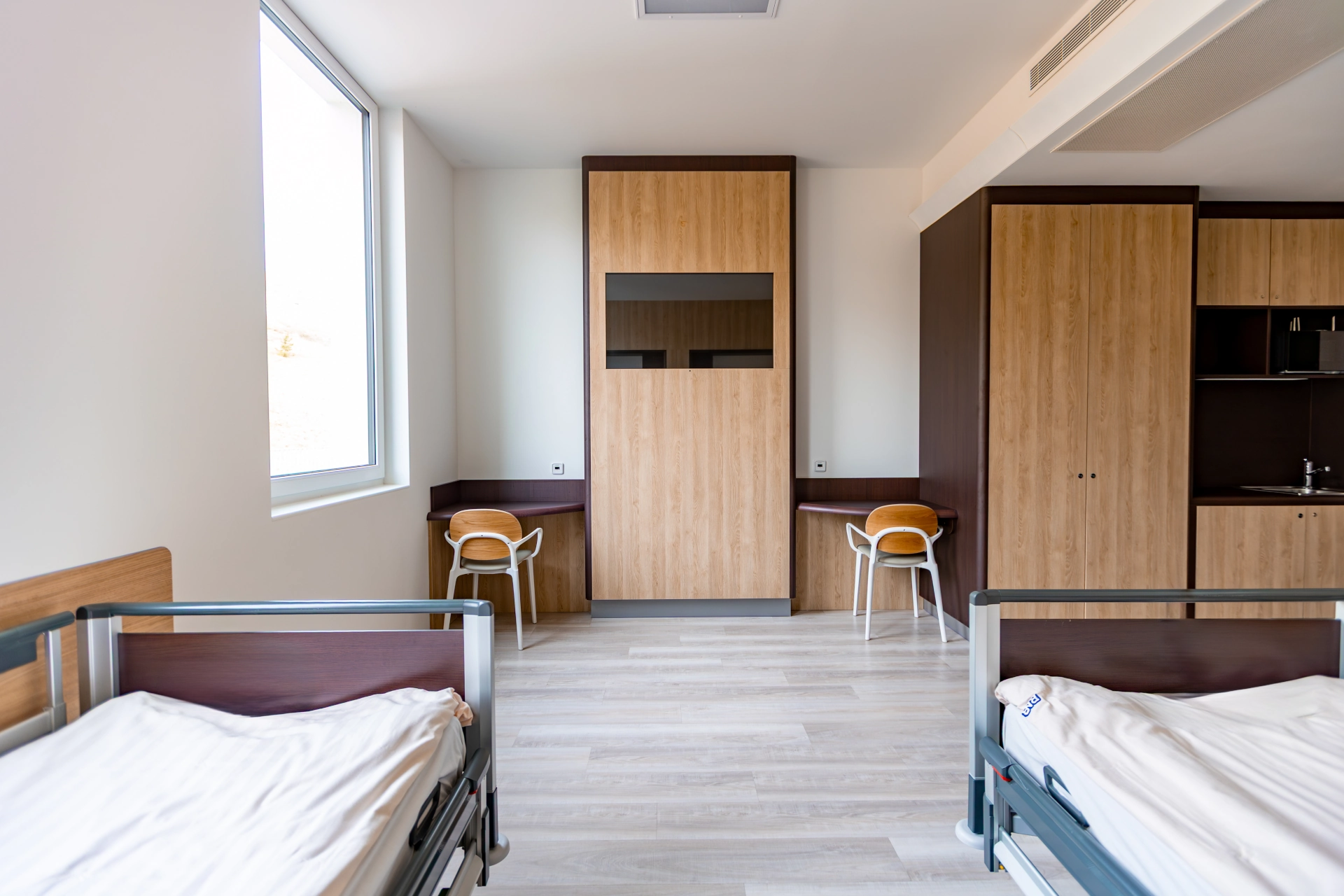
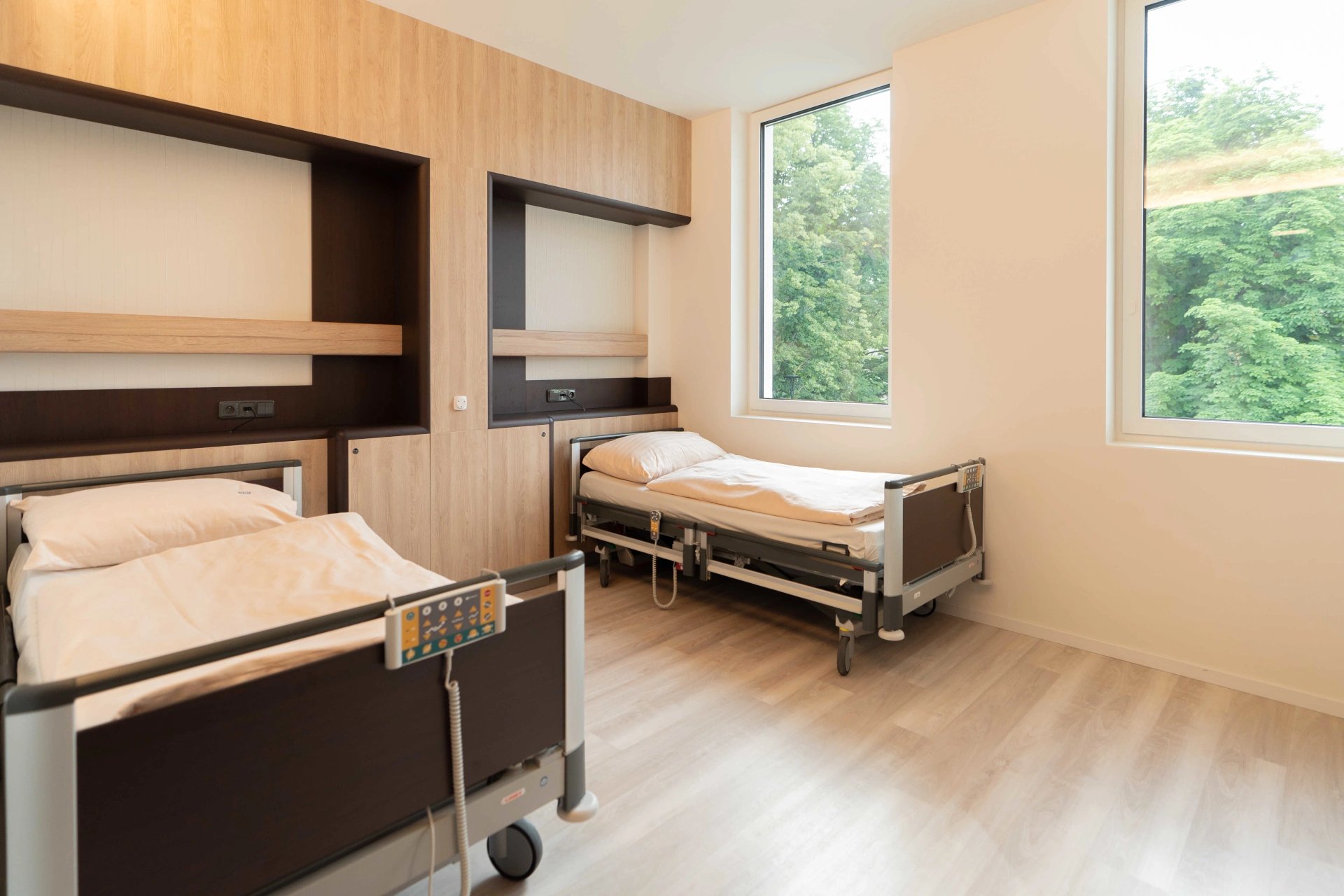
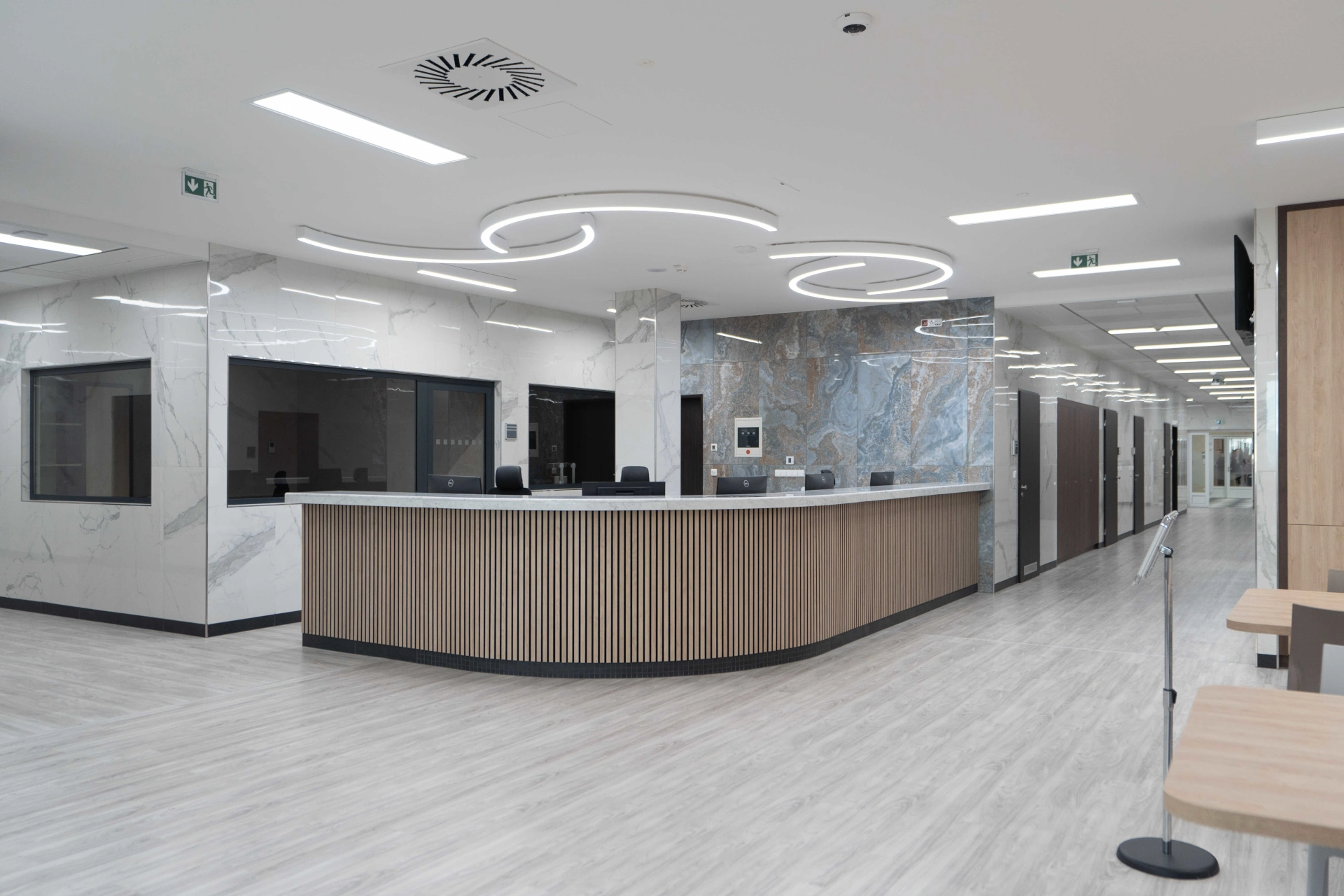
On the day of your admission, please report to reception in the atrium at the specified time. Reception staff will contact staff from the ward where you will be admitted, who will collect you from reception and escort you to the ward. There, the nursing staff will familiarise you with the ward’s routine, schedule and rules. You will be accommodated in single or twin rooms, each with its own en-suite facilities.
Throughout your treatment, experienced staff will be on hand at all times to answer any questions you may have and to help resolve any issues that may arise. Your comfort and sense of security are our top priority.
You can already find more detailed information about the programme you will be following in the ‘Our Services’ section.
What to bring
- an identity card or other form of identification (passport)
- health insurance card
- referral for hospitalisation and results of previous tests
- sick note (if you have one)
- personal belongings:
- comfortable everyday clothing
- sportswear
- pyjamas (nightwear)
- bathrobe
- indoor shoes (non-slip, comfortable, flat)
- personal hygiene items
- towel
- medication: during your stay at the CDR, the attending physician will draw up a list of all the medication you are taking, and a nurse will administer it. If you are taking any medication to treat a specific condition, please bring it with you to the hospital. Upon arrival at the ward, please hand over all medicines and dietary supplements you have with you to a nurse. Your attending physician will include them amongst the medicines that will be administered to you during your stay in hospital. Do not take any other medicines or dietary supplements during your stay in hospital without your physician’s knowledge. You will receive your medicines from the nurses in the correct dose and at the correct time.
It is not advisable to bring large sums of money or valuables with you when you are admitted. It is forbidden to carry weapons or controlled substances.
Some toiletries can be purchased at the café in the CDR atrium.
What documents you will be asked to sign
Consent to hospitalisation
Part of the admission process involves signing a consent form for hospitalisation. You will be asked to provide details regarding your stay (e.g. information for relatives, identification wristband, etc.). You can view the form here.
How to get here
The Mental Health Rehabilitation Centre is part of Rehabilitation Hospital Beroun; you will find it in Building S at the rear of the grounds, on the left-hand side. The reception staff at the hospital entrance will be happy to direct you.
The hospital is located at Prof. Veselého 493, 266 56 Beroun 1.
By car
The hospital is easily accessible by car; you can reach it via Profesora Veselého Street and it is clearly visible from a distance.
Before entering the grounds, you will find a spacious outdoor car park on the right-hand side. Parking on the hospital grounds is permitted only for holders of ZTP and ZTP/P cards.
By public transport
Right next to the hospital grounds, you’ll find the ‘Profesora Veselého’ stop on the Beroun city bus network. Bus route 825 stops here.
If travelling by intercity bus, we recommend using the ‘U Slavaše’ stop, from which it takes about twenty minutes to walk to the hospital.
If you are travelling by train, it takes about half an hour to walk to the hospital from Beroun railway station. Some train services also stop at Beroun-Závodí station, which is closer to the hospital (about a twenty-minute walk).
On foot
Although the Rehabilitation Hospital Beroun is situated on the outskirts of the town, you can easily reach it on foot. The walk from the centre of Beroun should take no more than half an hour at a leisurely pace.
Parking
Directly below the Rehabilitation Hospital Beroun complex is a car park with a pay-and-display machine and a capacity of 268 spaces:
- parking for up to 60 minutes is free
- each additional half-hour or part thereof is charged at 30 CZK/30 mins.
Once you have paid the parking fee, please leave the car park within 30 minutes.
Parking for inpatients in the car park below the hospital grounds:
- 250 CZK per day
- 50 CZK per day for holders of ZTP and ZTP/P cards
Parking within the hospital grounds is not permitted!
The only exception is for holders of ZTP and ZTP/P cards, who may park free of charge on the hospital grounds for 4 hours in the designated spaces. However, their vehicle must display special marking no. 07 and they must present their personal disability card at the gatehouse. Parking on the hospital premises for longer than 30 minutes is subject to a charge of 60 CZK per 30 minutes for each additional half-hour or part thereof.
The loss of a parking ticket is subject to a charge of 3,000 CZK.
Visiting rules
Patients may receive an unlimited number of visitors, provided that their medical condition, the ward’s routine and programme, and fellow patients are taken into account. Visits to patients’ rooms are not recommended.
Recommended visiting hours vary across wards depending on the specifics of the ongoing treatment programme.
Visitors must respect the running of the ward and follow staff instructions. It is also forbidden to bring prohibited items into the CDR, such as sharp objects, weapons or controlled substances.
Café
During your free time, you can also make use of the café, which is located in the CDR atrium. As well as coffee, tea, pastries and delicatessen items, you can also buy some basic groceries and essential toiletries there. The café is also open to the public, making it the ideal place to meet people who have come to visit you.
Payments at the café can be made in cash or by card.
Patients’ rights and responsibilities
A patient has the right:
- to have all healthcare services provided solely on the basis of their free and informed consent. Exceptions to this rule may only be laid down by law.
- to choose their healthcare provider. This does not apply in the case of emergency care.
- to refuse to consent to the provision of healthcare services, unless these are services that may be provided without consent.
- to have healthcare services provided to them to an appropriate professional standard, i.e. in accordance with scientific principles and recognised medical practices, whilst respecting the patient’s individuality and taking into account the specific circumstances and objective possibilities that correspond to the patient’s healthcare needs.
- to be treated with respect, dignity and consideration, and to have their privacy respected when healthcare services are provided, in accordance with the nature of the services provided.
- to inspect their own medical records, and to obtain extracts, transcripts and copies thereof.
- to designate persons who may be informed of their state of health or who may inspect their medical records and obtain extracts, transcripts or copies thereof.
- to seek consultation services from another provider or, where appropriate, from a healthcare professional other than the one providing their healthcare services.
- to be made aware of the internal rules of the inpatient or day-care healthcare facility.
- if they are a minor, to the continuous presence of their legal deputy, or a person designated by the legal deputy, a foster parent, or another person to whose care the patient has been entrusted by a decision of a court or other authority.
- if they have been deprived of legal capacity, or if their legal capacity is restricted to such an extent that they are unable to assess the provision of healthcare services or, where applicable, the consequences of such provision, the continuous presence of the legal deputy, or a person designated by the legal deputy.
- to the presence of a close relative or a person designated by them, provided that the presence of such persons does not contravene the internal rules and does not disrupt the provision of healthcare services.
- to be informed in advance of the cost of healthcare services provided which are not covered by public health insurance or which are only partially covered by public health insurance, and of the method of payment.
- to know the first name and surname of healthcare professionals, other specialist staff and trainees at the Mental Health Rehabilitation Centre who are directly involved in the provision of healthcare services.
- to refuse the presence of persons who are not directly involved in the provision of healthcare services, and of persons training to practise as healthcare professionals.
- to receive visitors in an inpatient or day-care healthcare facility, taking into account their state of health and in accordance with the internal rules and in a manner that does not infringe the rights of other patients.
- to receive spiritual care and support in an inpatient or day-care healthcare facility from clergy of churches and religious societies registered in the Czech Republic, or from persons authorised to carry out pastoral activities in accordance with the internal rules of the Mental Health Rehabilitation Centre and the ward, in a manner that does not infringe upon the rights of other patients, and taking into account their state of health.
- if they are a minor or a person deprived of legal capacity, or if their legal capacity has been restricted, to request that, whilst healthcare services are being provided, no person be present whom the patient alleges is abusing, otherwise mistreating or neglecting them.
- to lodge a complaint in person or in writing. The procedure for lodging a complaint can be found on the website www.nemocnice-beroun.cz; internet access is available to patients 24 hours a day throughout their hospital stay.
- A patient with a sensory impairment or severe communication difficulties caused by medical reasons has the right, when communicating in relation to the provision of healthcare services, to be understood in a manner comprehensible to them and through means of communication of their own choosing, including methods based on interpretation by a third party.
- A patient with a sensory or physical disability who uses a specially trained dog (guide dog or assistance dog) has the right, taking into account their current state of health, to be accompanied by and have the dog present with them in a healthcare facility, in the manner set out in the internal regulations, so as not to infringe upon the rights of other patients.
The patient is obliged to:
- comply with the proposed individual treatment plan, provided they have given their consent to the provision of healthcare services.
- comply with the ward’s internal regulations.
- pay the Rehabilitation Hospital Beroun for the cost of healthcare services provided which are not covered by public health insurance, or which are only partially covered by public health insurance, provided that these healthcare services were provided with the patient’s consent.
- provide the attending physician with truthful information regarding the history of their medical condition, including details of infectious diseases, healthcare services provided by other providers, the use of medicinal products, including the use of addictive substances, and other facts relevant to the provision of healthcare services.
- not to consume alcohol or other addictive substances during hospitalisation and, where justified, to undergo, at the attending physician’s discretion, tests to determine whether or not they are under the influence of alcohol or other addictive substances.
- the patient, the patient’s deputy, a person designated by the patient, a person close to the patient, a person from the same household, any other person intending to visit the hospitalised patient, or a person requesting information about the patient’s state of health, are required to prove their identity by presenting an identity card if requested to do so by the Mental Health Rehabilitation Centre or by a healthcare professional through whom the hospital provides healthcare services to the patient.
The Mental Health Rehabilitation Centre respects and supports the right of patients and their relatives to participate in decisions regarding the healthcare provided.