Česky


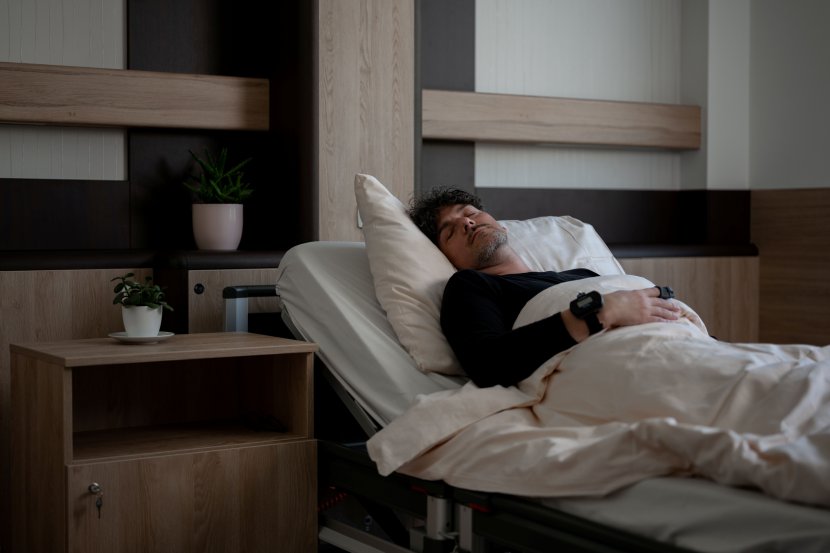
On Sunday, we’ll switch back from summer time to Central European Time, commonly known as winter time. Although we can sleep for an hour longer, our bodies have to adjust to the new daily rhythm. And for some people, this can be more challenging than it seems at first glance.
This is because our bodies are not governed solely by the time on our watches. So-called circadian rhythms – our internal biological clocks – play an important role, influencing the cycle of sleep and wakefulness as well as other bodily functions. These rhythms are primarily synchronised by daylight, but also by the regularity of our daily routines.
The time change can temporarily disrupt this natural rhythm. Whilst some people hardly notice it, others struggle for several days with difficulty falling asleep, waking up too early, feeling tired during the day or having trouble concentrating.
A LACK OF QUALITY SLEEP ALSO AFFECTS MENTAL HEALTH
Sleep is not just a time for the body to rest. It is also important for processing emotions, memory, attention and the ability to cope with everyday stress. If we sleep less well or our sleep pattern is disrupted, we may be more irritable, more sensitive to stress and find it harder to concentrate.
A change in the time of year does not in itself lead to mental health problems. However, for people who are already struggling with insomnia, anxiety or other mental health issues, a temporary disruption to their sleep can exacerbate their difficulties.
Light also plays a significant role. Daylight helps the body recognise when it is time to be active and when, conversely, to prepare for rest. With the arrival of autumn, however, the days are shorter and there is less natural light, which can make it even more difficult for our biological clocks to adjust.
That is why it is important to view sleep as one of the fundamental aspects of looking after both physical and mental health.
How can you promote good-quality sleep after the time change?
The body usually adapts to the autumn time change within a few days. However, good habits can make the transition easier.
1. Stick to a regular bedtime and wake-up time!
Try to go to bed and get up at roughly the same time every day. Regularity helps to stabilise your internal biological clock.
2. Get some daylight, ideally in the morning!
A morning walk or spending time outdoors during the day can help synchronise your circadian rhythm. Even in colder weather, it’s worth going outside and exposing yourself to natural light.
3. Don’t forget to get some exercise!
Moderate physical activity benefits both sleep and mental wellbeing. Regular walks, light exercise or any other form of activity that suits you can help improve the quality of your rest.
4. Limit your caffeine intake later in the day!
Coffee, energy drinks and other sources of caffeine can make it harder to fall asleep, especially if consumed in the afternoon or evening.
5. Establish a calm evening routine!
Before bed, limit work-related tasks, allow yourself time to wind down, and try to avoid activities that unnecessarily stimulate you. Dimmer lighting and limiting the use of electronic devices before bed can also help.
6. Allow yourself plenty of time to rest!
If you feel tired after the time change, don’t try to fight it in the long term at the expense of your sleep. Listen to your body and give it space to adjust naturally.
Will melatonin or sleeping aids help?
During the normal transition from summer to winter time, most healthy people do not need any medication or sleep aids. The body usually adapts on its own, especially if it has enough time to rest and follows a regular routine.
One option often discussed in relation to sleep patterns is melatonin. This is a hormone that naturally plays a role in regulating the sleep-wake cycle. However, taking it is not automatically suitable for everyone, and correct timing is also important.
If you are experiencing significant sleep difficulties, it is advisable to consult a physician or pharmacist to find out whether taking melatonin or another product is suitable in your particular case.
CHANGING THE TIME IS NOT THE SAME AS JET LAG
Whilst we set our clocks forward by one hour when switching to winter time, travelling across several time zones places a significantly greater strain on the body. In such cases, our internal biological clock becomes out of sync with local time.
You may experience significant drowsiness during the day, difficulty falling asleep at night, reduced concentration, irritability or mood swings. Some people also experience digestive problems.
Adaptation depends, amongst other things, on the number of time zones crossed, the direction of travel, age, state of health and the light conditions at the destination. If a person travels frequently and does not have enough time to recover between journeys, fatigue can gradually build up.
Even in these situations, it is important to ensure you get regular sleep, spend time in daylight and take opportunities to rest.
When should sleep problems not be underestimated?
Short-term fatigue or difficulty falling asleep following a time change are usually temporary. However, if the problems persist, recur or significantly interfere with daily life, it is not advisable to automatically attribute them to the time change.
Reasons to consult a specialist may include, for example, long-term difficulty falling asleep, frequent night-time awakenings, significant daytime tiredness, or persistent mood swings and increased anxiety.
Long-term sleep problems can have various causes, which is why it is important to pay attention to them and seek professional help if necessary.
SLEEP AS THE FOUNDATION OF MENTAL WELL-BEING
The autumn time change reminds us how closely our daily routine is linked to the functioning of both our bodies and our minds. Good-quality sleep, regularity, exercise and plenty of daylight are important parts of looking after our mental health.
If the body needs a few days to adjust, let’s give it time and not try to fight fatigue in the long term at the expense of rest. And if the problems persist, it is important to identify their cause.
Our specialists at the Centre for Sleep Medicine in Beroun, led by Professor MUDr. Jan Polák, Ph.D., MBA, specialise in the treatment of mental health issues associated with sleep disorders.
You can find more information about the Centre for Sleep Medicine and its services on the website: https://www.spanek-akeso.cz/