Česky
Česky


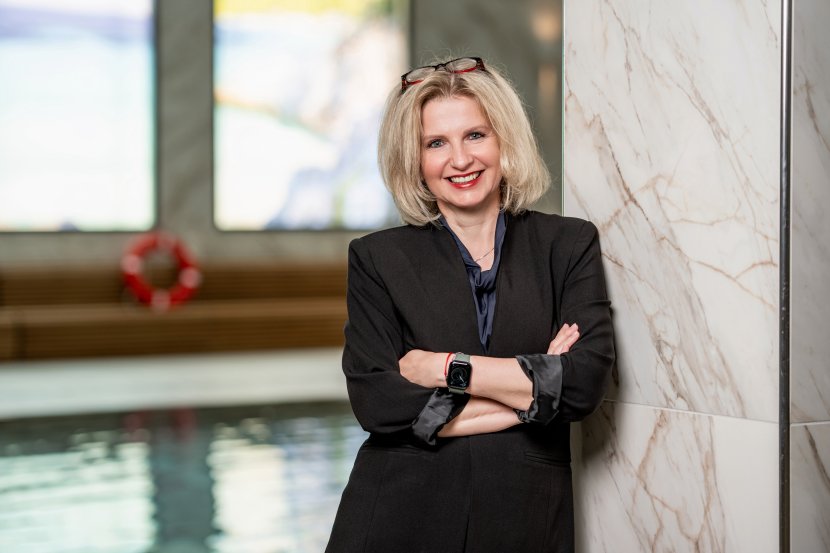
Can you tell us what childhood experience led you to the nursing profession?
When I was nine years old, I was hospitalized in a hospital in the children's ward. I remember not liking the behaviour of some of the nurses there, who were downright mean to the children. So I told myself then that I wanted to be a nurse when I grew up, but I would be nice and I would never be that nasty to children. So after finishing primary school, I went to study to be a children's nurse at the 5. května Secondary Medical School in Prague.
It's very impressive that you pursued this goal from school age. What was it like when you then served your first shifts?
The beginning was very difficult. I studied before 1989, when conditions were hardly close to ideal. We started our internship at Motol Hospital in the adult surgical ward, and I had it fixed that the nurses were just such angels. But then disillusionment quickly set in when the other side of the coin was revealed to me during my service, that the work was physically and mentally very demanding. Later, in the senior year, we then did our internship in the pediatric ward. There I was already enjoying it very much.
So your childhood dream finally came true and you started helping sick children.
Yes, but only for five years, until I went on maternity leave. When I went back to work, it was in the adult ward. I was very much influenced by the fact that I already had my own children, so I felt very sorry for the sick children on the ward. I saw my own behind each one. And that was hard to overcome. So professionally I switched to adult patients and joined first the surgical ward and then the intensive care unit.
It is not often that promising young nurses are demotivated by the demands of the profession and leave. This has happened to you.
This is certainly because I have set a very high standard from the beginning for a dignified approach to patients, whether they are somatically or mentally ill. In more difficult moments, this way of thinking has always helped me to carry on. In addition, when a life is saved - that a person recovers or is somehow stabilized - we as health professionals experience a tremendous amount of joy. In this context, I like to recall a particularly powerful experience when I was serving in the ICU at Kladno Hospital about five years ago. We admitted an unconscious patient in a very serious condition, and throughout all the procedures I kept talking to her and caring for her. Then, when her condition was much better, I was on duty again and came to her room for the first time. She greeted her and asked how she was. She told me she knew me. I told her that we had only met once when she was not well at all. "Your voice and smell, I remember them very well," she replied and thanked me. This made me even more certain that our work was very meaningful.
Was it experiences like this, and your personal philosophy, that made you decide to go into teaching for a while?
Yes, it was. Because I wanted to pass on my passion for the nursing field. So, while I was working, I went back to school and did a Bachelor's degree in Health Sciences at the 3rd Faculty of Medicine to broaden my knowledge. I then went on to do a Masters in Clinical Nursing and Health Professions Education at the 1st Faculty of Nursing, UK. Which now allows me to teach health care disciplines in secondary and higher education. I believe that if you motivate a young person properly in high school, they will get excited about the work and understand its meaning. Then he or she starts to do it very well, and most importantly, likes it.
When did you first get into psychiatric care?
During my time in the ICU department at the hospital in Kladno, I quite often encountered hospitalized patients suffering from some kind of mental disorder. So there was a certain connection before. Then, in 2009, I was offered the position of head nurse at the Zahrada PSS Kladno facility, which is dedicated to mentally disabled people, where I ended up spending 10 years. Although we dealt with clients with mental disabilities, we often dealt with mental illnesses such as schizophrenia and other similar disorders. From the position of head nurse, you work less with patients because you mainly have to keep the wards running. However, I liked to take the services, so I knew all of our clients, who were in the hundreds, very well. I learned a lot there.
As a head nurse, you are now working at the Mental Rehabilitation Centre. What appealed to you most about this position?
The overall concept of treatment and its modern approach - that is, how we take a different and innovative approach to psychiatric care at the centre. It is very close to my heart how the dignity of the clients and the solution of their problems are taken care of here in modern ways. We take a human approach that creates a safe environment for patients, where we are all interested in talking to them, not just medicating and physically restraining them. This basically ties in with the basic idea that I had even then, at the age of nine.
With what vision and goal did you accept the position of head nurse?
Personally, it means a lot to me to be part of such an important project and I very much appreciate the opportunity to contribute my experience and ideas to its development. But at the same time I am aware of the great responsibility when you work on something like this. It is important to take good care not only of our patients, but also of our staff. If you have a job where you feel good, you like to go to it and do it well. That's how you keep the quality of care high.
Working in psychiatry is very demanding on the psyche of the staff. How do you cope with this strain at the centre and what strategies do you use to maintain mental wellbeing?
My aim is for my colleagues to have confidence in me and to be able to come to me at any time with any problem. It may happen that, for example, because of the patient mix, a certain amount of stress accumulates on the ward. This situation is then usually dealt with through interview and supervision, where the problems or concerns that have arisen are uncovered, named and worked through. This process is very important for creating a safe environment and as a prevention of burnout syndrome.
What do you think is the key to ensuring quality psychiatric care in the Czech Republic?
The biggest issue that resonates through all psychiatric facilities in the Czech Republic is undoubtedly the lack of quality nursing staff. It really is one of the keys to successfully providing excellent care. We are therefore working intensively to fill the vacancies. For example, this spring we launched a learning opportunity for general nurses, a specialty training program focused on psychiatric nursing. Upon completion, interested candidates will become fully competent to work in psychiatry.
Can you share with us what advice you would give to aspiring nurses?
It is definitely necessary to have a mind and a feeling for working in nursing. Then there is the need to be prepared to give a lot of yourself knowing that little will come back. On the other hand, even the "little" you do receive back is worth it because you know you have helped save a person's health or life every time, and that is a huge reward.