Česky
Česky


What role does the psychotherapy department play within the Mental Rehabilitation Centre?
I believe it is one of the center’s cornerstones. We focus primarily on intensive psychotherapeutic work with patients. We offer a clearly structured program of therapeutic activities and a safe environment where patients have six weeks to focus on their mental health, better understand it, and begin working toward change.
In your opinion, what makes the care at the center world-class, and what are its advantages over standard outpatient care?
Above all, it lies in the integration of various professions and the comprehensiveness of care—both psychiatric and somatic. When necessary, we collaborate with the Rehabilitation Hospital Beroun and the Hospital Hořovice, so we can also provide patients with the necessary somatic care. Another major advantage is our range of modern treatment methods, from various psychotherapeutic approaches to neurostimulation techniques.
You treat patients with borderline personality disorder, OCD, depression, or anxiety. What are the main goals of treatment during hospitalization?
The main goal is to stabilize the patient’s mental state and equip them with tools that will help them manage their difficulties even after returning to everyday life. It’s not just about making the patient feel better during their stay, but about helping them understand what triggers their difficulties and equipping them with specific strategies for dealing with them.
“A nurse in the psychotherapy ward is a vital pillar of the entire care process.”
What methods do you use?
We combine multiple therapeutic approaches. These include, for example, cognitive-behavioral therapy, elements of schema therapy, working with emotions, coping strategy training, and psychoeducation. Individual and group therapy are also important components, as they allow patients to safely work through relationships and social situations. The complementary care team and supplementary activities—such as music therapy, art therapy, movement programs, or drama therapy.
What changes do you most often observe in patients during their stay?
The six-week program allows us to get to know the patients really well. We often see how they gradually gain a greater understanding of themselves. They begin to recognize their emotions, stress triggers, or relationship patterns that they were previously unaware of. They’re better able to identify what state they’re currently in, and they gradually learn to respond differently than before. Powerful moments occur, for example, when a patient is able to use a new strategy for the first time in a challenging situation and manages it without resorting to self-destructive behavior.
How does the role of a nurse in a psychotherapy department differ from that in other fields?
Here, the nurse is much more an integral part of the therapeutic process. She is in daily contact with patients and is often the first person they turn to in moments of crisis. At the same time, she helps create a safe environment on the ward. In psychiatry, I generally appreciate the relationship between the physician and the nurse. Observation is an important part of the diagnostic process, and nurses or orderlies spend the most time with patients. In addition to professional expertise, empathy, the ability to listen, patience, and personal stability are therefore key. A nurse must respond sensitively, but at the same time be able to maintain clear boundaries.
What is the most challenging aspect of your work, and what is the most fulfilling?
The most challenging part is usually dealing with strong emotions and, at times, the patients’ great suffering. You have to remain professionally present while also maintaining your own emotional stability. On the other hand, the very opportunity to witness change is a great source of motivation. When you see a patient who arrived in a very serious condition leave with greater hope, self-confidence, and concrete tools to help them in life, it’s very fulfilling.
How do you think society’s view of mental health is changing?
I think it’s gradually improving. Psychiatry is undergoing a process of destigmatization, and people aren’t as afraid to talk about their struggles anymore. They’re increasingly realizing that mental health challenges aren’t a sign of weakness, but rather a part of the human experience that deserves professional help.
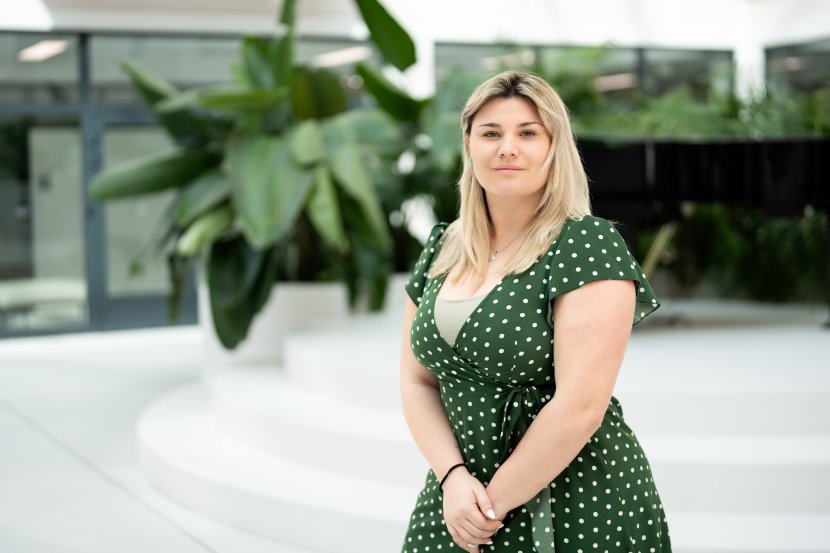
Mgr. Bc. Veronika Kurešová works as a ward nurse in the psychotherapy department of the Mental Rehabilitation Centre.
- She graduated from a nursing school in Kladno and subsequently studied special education, nursing, and earned a master’s degree in psychiatric nursing from the Faculty of Medicine at the University of Ostrava.
- She gained experience at Kladno Hospital and the Central Military Hospital in Prague, among other places.
- She has been working at the Mental Rehabilitation Centre since its founding in 2023.
This interview is part of the current issue of NÉA magazine. You can browse the entire issue here.