Česky
Česky


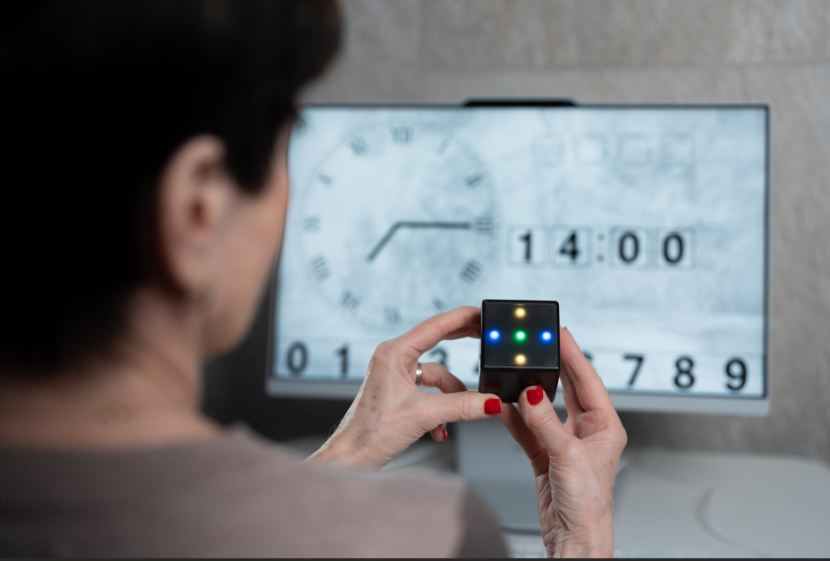
Experts from the Rehabilitation Centre and the Mental Health Rehabilitation Centre at Beroun Hospital are now focusing on the rehabilitation of patients whose cognitive functions deteriorate due to acquired brain damage or degenerative diseases. They are cared for by a multidisciplinary team consisting of doctors, occupational therapists, physiotherapists, psychologists and special educators. The hospital in Beroun is quite unique in this complex concept of care in one place.
The first step towards cognitive rehabilitation is always a doctor's recommendation. "We refer patients whose examination has revealed a problem in the intellectual field. At the same time, we have to rule out that there is no organic disorder in the patient's brain that we need to address in another way. At that point, we approach cognitive rehabilitation - as one of the options - and begin to train the mental function that is impaired. We use this type of rehabilitation for many patients with psychiatric disorders, neurodegenerative diseases or other brain disabilities. We know from experience that in such patients, proper rehabilitation can not only delay the progression of the disease but also improve overall mental performance," says neurologist and psychosomatic specialist at the Centre for Mental Rehabilitation and member of the multidisciplinary cognitive rehabilitation team David Pánek, M.D., Ph.D., adding: "We work
We work with patients whose difficulties are on the borderline between psychiatry and somatic medicine. We are creating a multidisciplinary model of neurocognitive rehabilitation that combines the expertise of neuropsychiatry, neurorehabilitation and occupational therapy."
When a patient is evaluated and referred for cognitive rehabilitation, he or she most often receives care from an occupational therapist, physiotherapist, psychologist and other specialists. They are then most interested in how the patient is able to communicate, understand common tasks, memory, logical reasoning, and orientation in time and space. "We work with patients using different software and applications. We have modern detailed screening computer programs that detect even minor disorders that may not be apparent at first glance. We also apply movement therapy with biofeedback (biofeedback is a therapeutic procedure that involves measuring personal physiological variables such as blood pressure, heart rate, temperature, sweating, muscle tension (EMG) in real time and presenting them in an appropriate form to the patient - editor's note), robotics, dual task therapy or dual task therapy. This consists in performing two tasks at once, for example counting while walking," explains the Deputy for Rehabilitation Care at Beroun Hospital Mgr. Jakub Pětioký, DiS., MBA.
The importance of movement therapy in cognitive rehabilitation is also confirmed by the occupational therapist of the Rehabilitation Hospital Beroun, PhDr. Kristýna Hoidekrová, Ph.D.: "In general, training of cognitive functions is more effective if it is complemented by movement therapy. It supports the patient's self-sufficiency in everyday activities such as cooking, dressing, caring for family and household, shopping, etc. This is not only for patients with neurodegenerative diseases, but also for patients after other acquired brain damage or the normal ageing population. However, patients suffering from some form of acquired brain injury or those with mental illness are no exception. As an occupational therapist, I need to be in constant contact with the doctor and have access to information such as whether the patient has adjusted medication, because this affects cognitive training significantly. The cooperation of the whole team, including the nursing staff, is important."
Another important part of the treatment and follow-up to cognitive rehabilitation is non-invasive transcranial direct current therapy (tDCS), which Beroun therapists apply to the weakened part of the brain in collaboration with neurologists to stimulate and strengthen it. This is another very effective and safe method of solving cognitive problems. "This certainly makes us unique in the Czech Republic, because not many workplaces offer such comprehensive care in one place," adds Hoidekrová.