Česky
Česky


You are taking over as director of the Center for Sleep Medicine. What achievements to date do you intend to build upon, and where do you want to take the center in the next phase?
I am taking over the leadership of the center with respect for what has been built here so far—from the very founding of the facility, through obtaining accreditation from the professional society, to the creation of a team of experts and functional relationships with key partners. It is precisely on these solid foundations that we can continue to build. Today, the center has a very strong professional foundation and a stable position. However, my goal is not to focus solely on the Czech context. I would like for us to gradually measure ourselves against the best European centers—in terms of the quality of care, the scope of our activities, and our ability to naturally integrate various specialties. Sleep medicine is a distinctly multidisciplinary field. Our neuropsychiatric foundation remains essential, and patients with psychiatric difficulties will continue to form an important part of our work. At the same time, however, we want to further develop care for other patient groups—for example, patients with obstructive sleep apnea syndrome, which is often associated with obesity, diabetes, hypertension, or arrhythmias. In addition, we aim to strengthen care for patients with insomnia, pregnant women with sleep disorders, and—in conjunction with the newly established AKESO Clinic for Movement and Sports Medicine —also address sleep issues among elite athletes. Our goal is for the center, building on a solid neuropsychiatric foundation, to offer a truly broad spectrum of modern sleep care for diverse patient groups.
The Key Role of Sleep
In your opinion, what role does sleep medicine play today within a large healthcare holding company, and why should it be a strategic part of it?
Sleep medicine plays a very important role within a large healthcare holding company because sleep fundamentally affects a person’s overall health. Sleep disorders are often not just a standalone problem but tend to be the cause of or a component in a wide range of diseases—from neurological and psychiatric disorders to obesity, diabetes, hypertension, or heart failure. They are also significant during periods such as pregnancy, when they often tend to take a back seat. This is precisely why sleep medicine should be a strategic component of the healthcare holding company. Modern sleep care is, by its very nature, multidisciplinary. It is not enough to simply provide high-quality diagnosis of sleep disorders; there must also be effective and rapid coordination with other specialties and diagnostic methods—ranging from imaging techniques through ENT, pulmonology, neurology, and psychiatry, all the way to obesity medicine and bariatric surgery. And it is precisely a large holding company that enables such integration. I also see great importance in prevention, because early detection and proper treatment of sleep disorders can help prevent the development of a whole range of lifestyle-related diseases, or at least mitigate their impact. I also consider one of our major advantages to be that we are part of a system with very good continuity of care across different specialties. Coordinators also play an important role in this, helping patients navigate the entire process as smoothly as possible. In my opinion, it is precisely this interconnectedness, comprehensiveness, and human approach that significantly distinguish the AKESO Sleep Medicine Center from many other facilities in the Czech Republic and create a very good foundation for its further development.
Which patient groups do you want to focus on most in the coming period, and why?
I wouldn’t want to frame it as if we intend to focus solely on one narrowly defined group of patients. Our goal is to help everyone who has trouble sleeping or who doesn’t wake up feeling rested in the morning and experiences fatigue, drowsiness, or reduced performance during the day. Experience shows that many people don’t even recognize their sleep problems—they attribute them to age, stress, or the pace of work, or they’ve simply grown accustomed to their condition. That is why I consider awareness-raising and education to be an important part of our work, both among colleagues from various disciplines and toward the general public. Naturally, we will continue to provide extensive care for patients with psychiatric and neuropsychiatric difficulties, as this stems from our professional expertise and close collaboration with the Center for Mental Rehabilitation. In addition, however, I see great importance in caring for patients with snoring and sleep-related breathing disorders. And it is also very important for us not to forget other groups, such as cancer patients or pregnant women. In other words, we do not want to be a center focused on just a few specific diagnoses, but rather a facility that is open to any patient for whom sleep may significantly affect their health, quality of life, or success at work or in school.
“Even seemingly mild sleep disorders can have a significant impact on a person’s daily functioning.”
Sleep Apnea as a Hidden Risk
A significant part of your professional work involves sleep-related breathing disorders in patients with obesity and diabetes. Why is this area particularly important from a medical perspective?
This is an area very closely related to my professional focus, both in clinical practice and in research. Its importance is great simply because more than half of the population is currently overweight or obese, and approximately ten percent of the population of the Czech Republic has diabetes. Both of these conditions are associated with a higher risk of further complications, particularly cardiovascular ones, and the presence of obstructive sleep apnea further increases this risk and worsens the overall prognosis. In 2025, our research group published a study showing that obstructive sleep apnea is an independent risk factor for mortality in patients with diabetes. In my opinion, this clearly demonstrates that if we correctly diagnose and treat sleep-related breathing disorders, we can help patients not only by relieving their fatigue and daytime sleepiness but also, likely, by improving their long-term prognosis. At the same time, this is an area that is often overlooked, because patients frequently attribute their sleep problems to other conditions or simply to normal fatigue. Furthermore, we know that commonly used questionnaires for patients with diabetes do not work well enough, so they fail to identify many people with significant health issues. It is also very important that quality sleep improves motivation to follow other lifestyle measures—patients have more energy, are in a better mood, and are better able to stick to their diet, exercise routine, and other recommendations. I think that modern medicine today focuses very intensely on treating blood sugar, blood pressure, or cholesterol, but often overlooks sleep. And sleep, in particular, may be one of the key factors that determine how well a patient is actually doing.
How do you plan to strengthen interdisciplinary collaboration at the center—for example, with diabetologists, internists, obesity specialists, gynecologists, or oncologists?
Interdisciplinary collaboration is absolutely crucial in sleep medicine. These issues very often overlap with other conditions, so good care cannot rely on just one specialty. In addition to diabetologists, internists, obesity specialists, gynecologists, and oncologists, collaboration with cardiologists, psychiatrists, neurologists, ENT specialists, pulmonologists, and a range of other specialties is also important to us. Equally important are non-medical professions: nutritional therapists, physiotherapists, psychotherapists, and movement therapists. I believe that the foundation of effective collaboration is actually quite simple: personal contact, mutual respect, and a shared commitment to ensuring that the patient receives the best possible care. That is precisely why I would like to meet with my colleagues—both within the holding company and beyond—in person as often as possible and explore the best ways to collaborate. When we succeed in effectively integrating these different areas of expertise, patients notice it very quickly—care becomes more understandable, smoother, and ultimately more effective.
“Obstructive sleep apnea is a risk factor for mortality in patients with diabetes.”
Sleep in Athletes
You are developing a project focused on the sleep of elite athletes. What can such a program offer not only to sports medicine but also to general clinical practice?
Sleep is extremely important for elite athletes, because even a minor disturbance can affect recovery, performance, and the risk of injury. We also know that sleep problems are very common among them—before competitions, during training, while traveling, and after changes in environment or time zones. In addition, we also see common sleep disorders in athletes, such as insomnia, sleep-related breathing disorders, or restless legs syndrome. This area clearly demonstrates how important an individualized approach is. For elite athletes, rapid diagnosis, an understanding of their routine, and the search for truly tailored solutions are essential. And this is precisely the approach that is also of great importance in general clinical practice. For me, it’s also a reminder that even seemingly mild sleep disorders can have a significant impact on a person’s daily functioning—whether it’s athletic performance, energy levels, concentration, mood, or the ability to cope with everyday life. Personally, I also find working with athletes inspiring, because their perseverance, discipline, and determination are admirable.
You’ve worked abroad for many years, and your work has an international scope. Where do you see the greatest untapped potential for sleep medicine in the Czech Republic?
I think it’s important to note that Czech sleep medicine has a very strong tradition and is by no means on the periphery in an international context. Associate Professor Bedřich Roth left a significant mark on the field, followed by a whole host of students and successors, particularly at the Department of Neurology at the First Faculty of Medicine of Charles University. In my opinion, we have successfully built upon this tradition. Even today, there are high-quality and internationally respected centers operating in the Czech Republic—for example, in Prague, Brno, Plzeň, Olomouc, and Ostrava—where outstanding experts collaborate with leading institutions around the world. So I don’t think we lack capable people or professional expertise. I see some untapped potential, for example, in the fact that sleep medicine is not yet a separate board-certification specialty in our country. I think that’s a shame, because greater institutional anchoring would help expand access to this care for many more people. And this is important from a broader perspective as well—sleep disorders are not a marginal issue, but a factor that significantly affects the health of the entire population. If we addressed them more systematically, we could also contribute to improving the overall health of the population of the Czech Republic.
What would you like readers to associate with your leadership of the center?
I would like readers to associate the Sleep Medicine Center with professional excellence, compassion, and openness to interdisciplinary collaboration. I want them to know that sleep medicine is not a marginal field, but an important part of modern mental and physical health care. And that our center is a place ready to serve as a reliable partner to colleagues across specialties and to patients who need help. If we succeed in getting more healthcare professionals to consider their patients’ sleep and, as a result, more patients receive timely diagnosis and treatment, I will consider that a very good outcome.
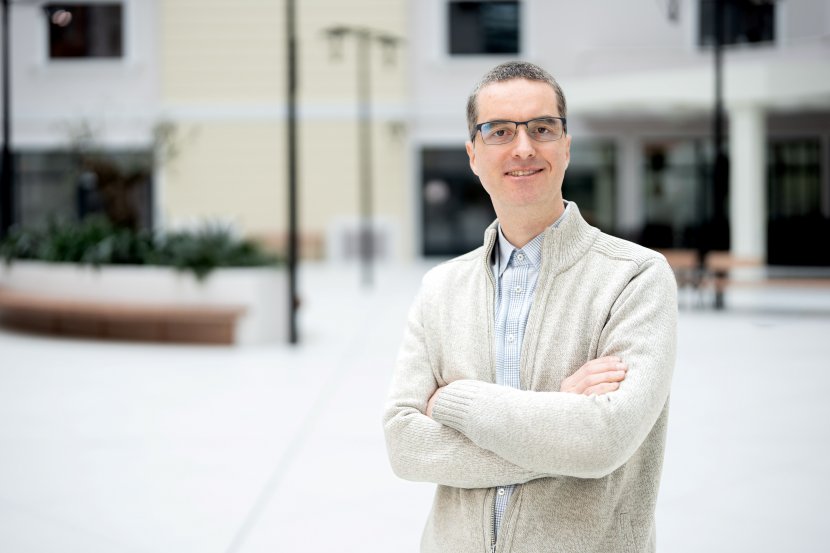
Prof. Jan Polák, M.D., Ph.D., MBA
Manager of the Center for Sleep Medicine
University professor, physician, scientist, and manager with many years of experience in the strategic management of higher education, research, and clinical medicine. In his scientific work, he specializes in the pathophysiology of metabolism, particularly the impact of sleep apnea on the development of insulin resistance and diabetes.