Česky
Česky


The common thread running through all these activities is the opportunity to take a break from current problems for a while and focus on the creative process. What’s more, patients almost always see the results of their work straight away. The creative workshopsat the Mental Health Rehabilitation Centre offer a wide range of activities. Patients can try their hand at, for example, knitting, crochet, macramé, felting, sewing, working with pedig, ceramic clay or natural materials. Each activity helps to develop different skills.
Art therapy and art psychotherapy
Art therapy and art psychotherapy are therapeutic disciplines that use artistic creation to promote health, self-development and personal growth. In these sessions, patients work in a group to practise drawing with crayons, watercolours, wax crayons, tempera or ink. They can also create collages or experiment with different art forms. In this way, they revisit their issues in a new way and subsequently work with the image they have created. This is visible to others and to the therapist, who helps to foster a better understanding, new insights and possible changes.
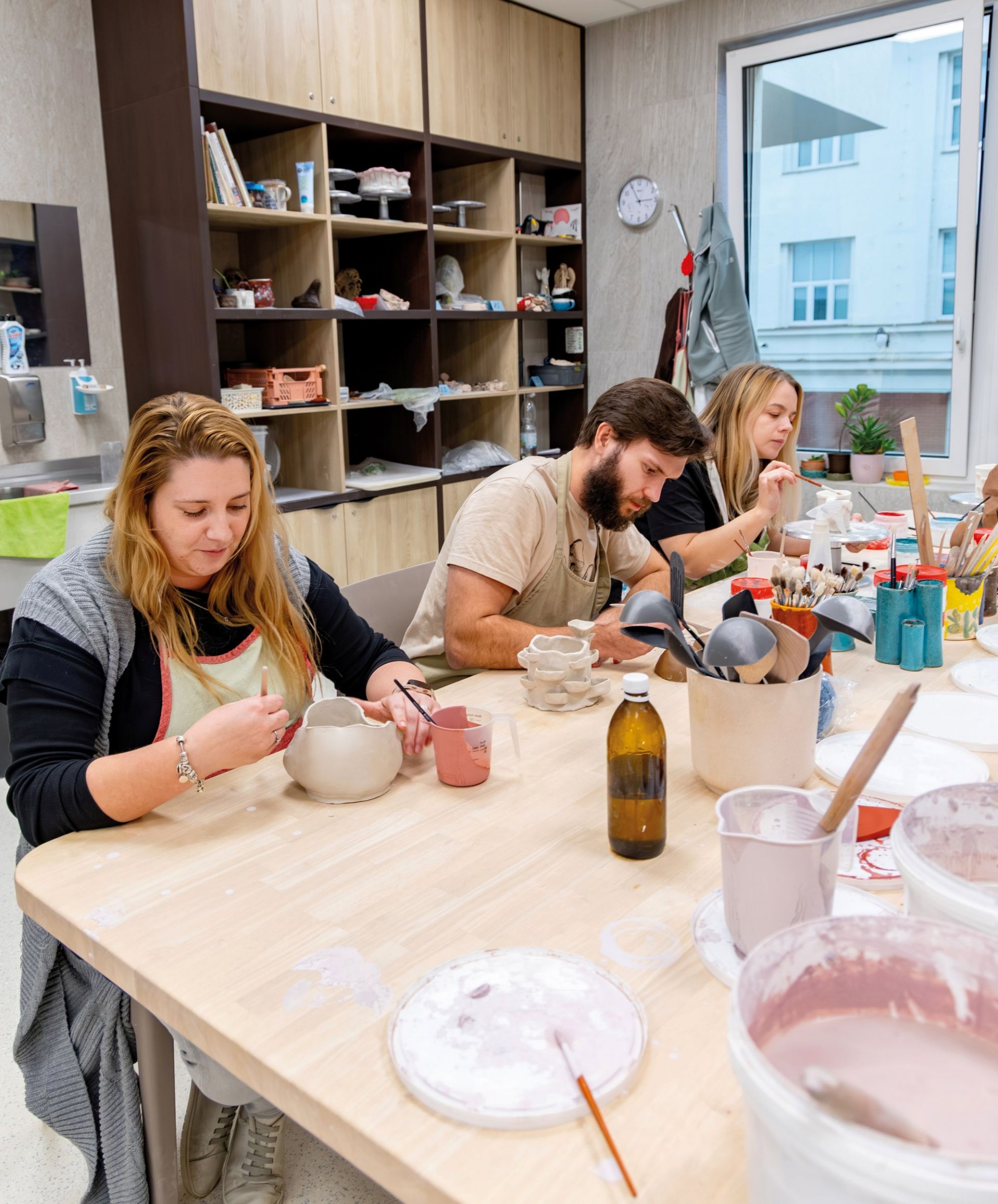
Pottery workshop
Working with clay develops fine motor skills, concentration and sensory perception. Patients create their own pieces, from modelling through to glazing and firing. Working with ceramic clay automatically stimulates the fingers and palms, relieving tension and aggression; conversely, it can also activate and restore physical strength and resources.
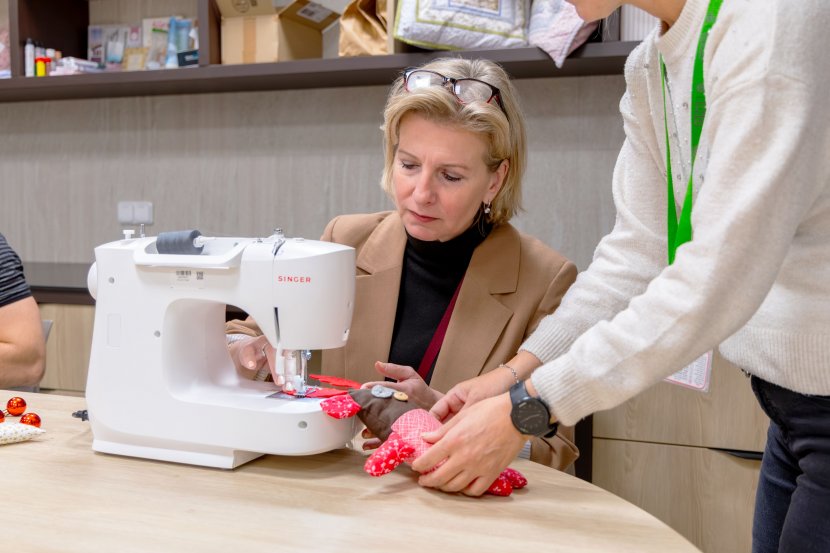
Sewing workshop
Through sewing, patients learn patience, diligence and concentration, whilst also improving their coordination as they perform multiple tasks simultaneously (using both hands and feet). Like any creative activity, sewing promotes calmness, relaxation and a sense of ease. Those who prefer not to use a sewing machine can opt for hand sewing or embroidery. It is also possible to finish off a project using fabric paints. Patients learn to sew items such as a shopping bag, a mobile phone case or a book cover. They can also actively contribute their own ideas, just as they do in the pottery workshop.
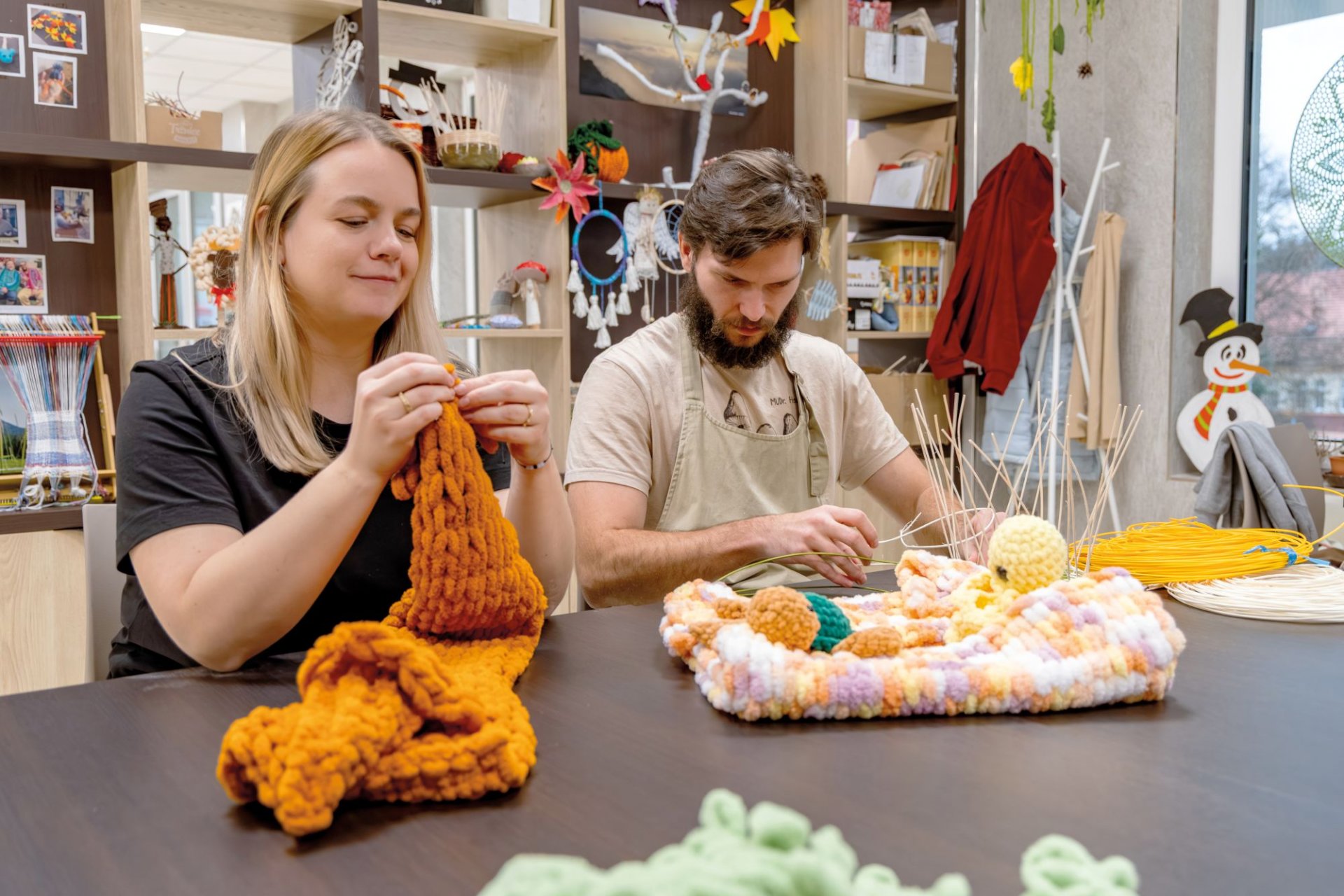
Knitting and Crochet
In the therapeutic workshop, the centre’s clients can try their hand at the basics of finger knitting, knitting with needles, crochet, macramé, weaving (card weaving), embroidery (cross-stitch, realistic, lace), beading or tapestry.
Textile techniques have a markedly calming effect. Repetitive patterns, such as stockinette stitch, can induce a state of flow. Conversely, complicated or new patterns force us to concentrate. It is a very effective way
calm for participants who are unable to stop the flow of their thoughts.
Complementary therapies can thus offer something seemingly simple. Picking up a paintbrush, a needle or a lump of clay and, for a moment, focusing entirely on what is taking shape. This, too, can be the path to a better understanding of oneself and a gradual return to normal life.
Would you like to know what else is happening here? On Facebookand LinkedIn, we share mental health tips, interviews with our experts, media articles and other interesting updates from our centre.